
Texas Court Docket Records
Texas court docket records show the full history of a case filed in state court. Each entry reflects a filing, a hearing, a court order, or a case status change. The state has 254 counties, and each one keeps its own docket files through the District Clerk and County Clerk offices. Many counties now offer online docket searches through their own portals or through the statewide re:SearchTX system. For the full case file or certified copies of orders, contact the clerk in the county where the case was filed. This guide covers how to find Texas court docket records, what they contain, and where to look.
Texas Court System Overview
Search Texas Court Dockets Online
The main tool for searching Texas court docket records online is re:SearchTX. It is the state's official public access portal, run by the Texas Office of Court Administration. Over 150 Texas counties participate. You can search by party name, case number, attorney name, or date range. The basic search is free and needs no registration. Results show party names, case status, hearing dates, and docket entries. Visit txcourts.gov/researchtx to start your search.
The Texas Judicial Branch website serves as the main gateway for all state court systems, with links to individual court websites, the judicial directory, court rules, and forms. Many of the largest counties also run their own online case search portals in addition to re:SearchTX. Harris, Dallas, Bexar, and Tarrant counties all maintain active online docket systems with real-time updates. Smaller counties may have limited or no online access, and for those you need to call or visit the District Clerk's office in person.
The Texas Judicial Branch provides comprehensive access to court resources across all 254 counties.
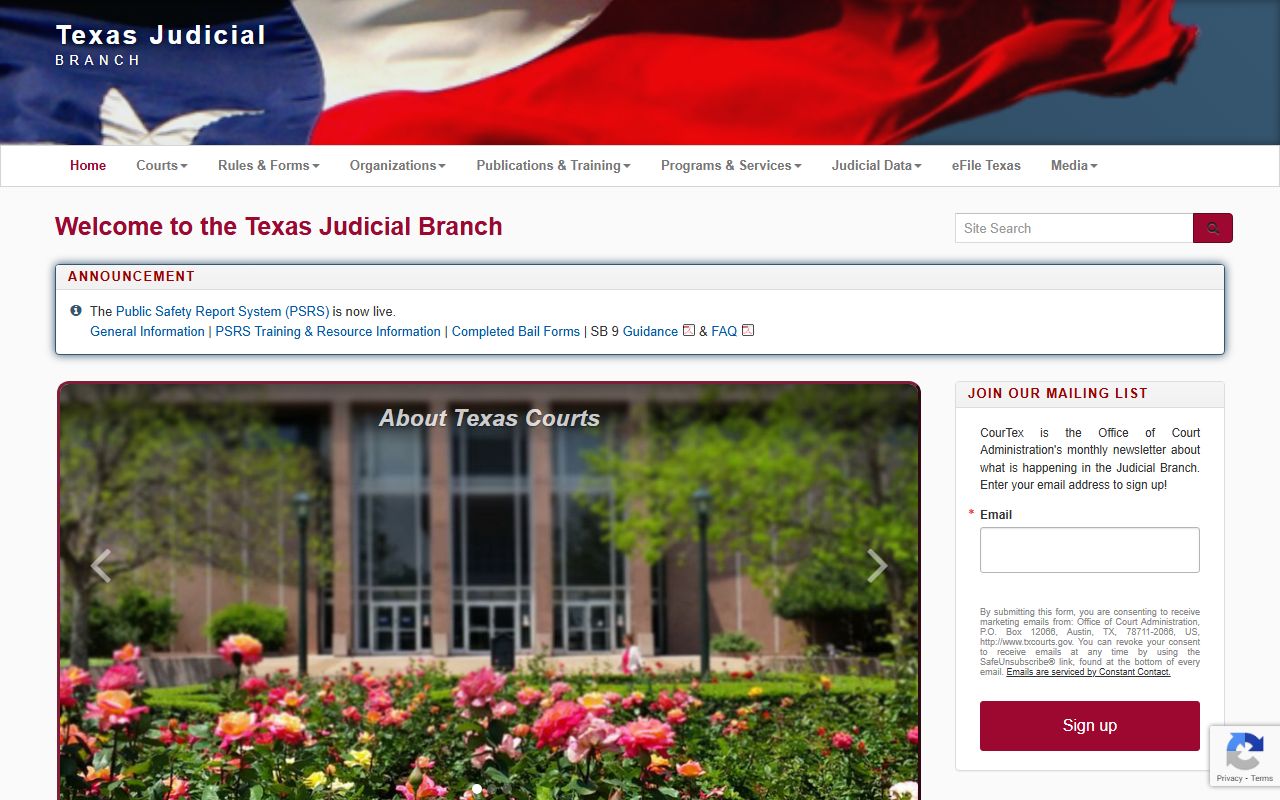
From this page you can reach individual court websites, download approved forms, and access the court rules that govern how docket records are maintained and made public across the state.
To search on re:SearchTX, you need the full name of at least one party or a case number. Date range filters help narrow results. The system covers civil, criminal, family, and probate cases from district courts and county courts at law in participating counties. It does not include every county, and some case types may have limited availability depending on local case management systems.
Note: re:SearchTX covers most Texas counties but not all. If a case does not appear, try the county's own website or call the District Clerk where the case was filed.
eFileTexas and Court Docket Access
Texas attorneys must file court documents electronically through eFileTexas, the state's official e-filing system. This system is mandatory for all attorneys filing in district courts, county courts at law, and appellate courts. It runs on the Tyler Technologies Odyssey platform and accepts filings 24 hours a day. When a document is filed through eFileTexas, it gets added to the docket in near real-time after the clerk processes it.
eFileTexas integrates directly with re:SearchTX. So when attorneys file documents electronically, those filings appear in the public docket search once processed. Self-represented litigants can also file electronically in many jurisdictions, though some courts still accept paper filings from pro se parties. The system provides immediate confirmation with a tracking number when a filing is submitted.
The eFileTexas portal is the entry point for all electronic court filings in Texas.
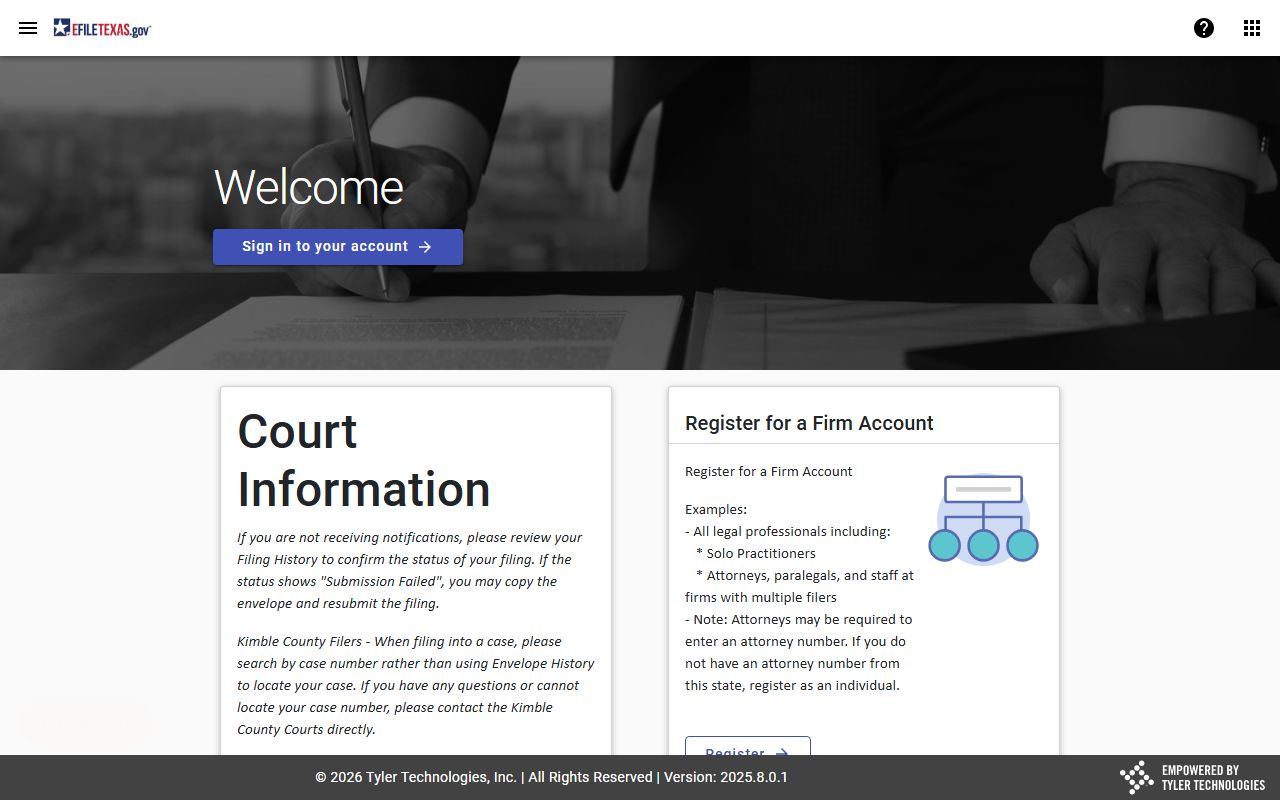
Attorneys register through this portal to file cases, submit documents to existing cases, and receive notifications when opposing counsel files new materials in the docket.
Texas Court Structure and Docket Types
Texas runs courts at four main levels. Each level keeps its own docket, and what you find depends on which court handled the case. Understanding the structure helps you know where to look.
The Texas Supreme Court handles civil appeals and juvenile cases. The Court of Criminal Appeals handles criminal appeals. Together, these two courts sit at the top of the system. Below them are 14 Courts of Appeals that cover geographic regions. These appellate courts hear cases from the lower courts and their dockets include oral argument calendars, briefs, and opinions. The Supreme Court and Courts of Appeals dockets are accessible through the Texas Judicial Branch website and through re:SearchTX.
District courts form the main trial courts in Texas. They handle felony criminal cases, civil cases over $500, family law matters, and juvenile cases. Each county has at least one district court. Large counties like Harris have dozens. The District Clerk in each county manages the docket for all district court cases. County courts at law handle misdemeanor criminal cases, civil cases under $250,000, and probate matters. The County Clerk runs those dockets. Below them, justice of the peace courts and municipal courts handle smaller civil disputes and Class C misdemeanors. Municipal court dockets are kept by each city and are separate from the county system.
The Office of Court Administration collects data from all Texas courts and publishes annual statistical reports on case volumes and processing times.
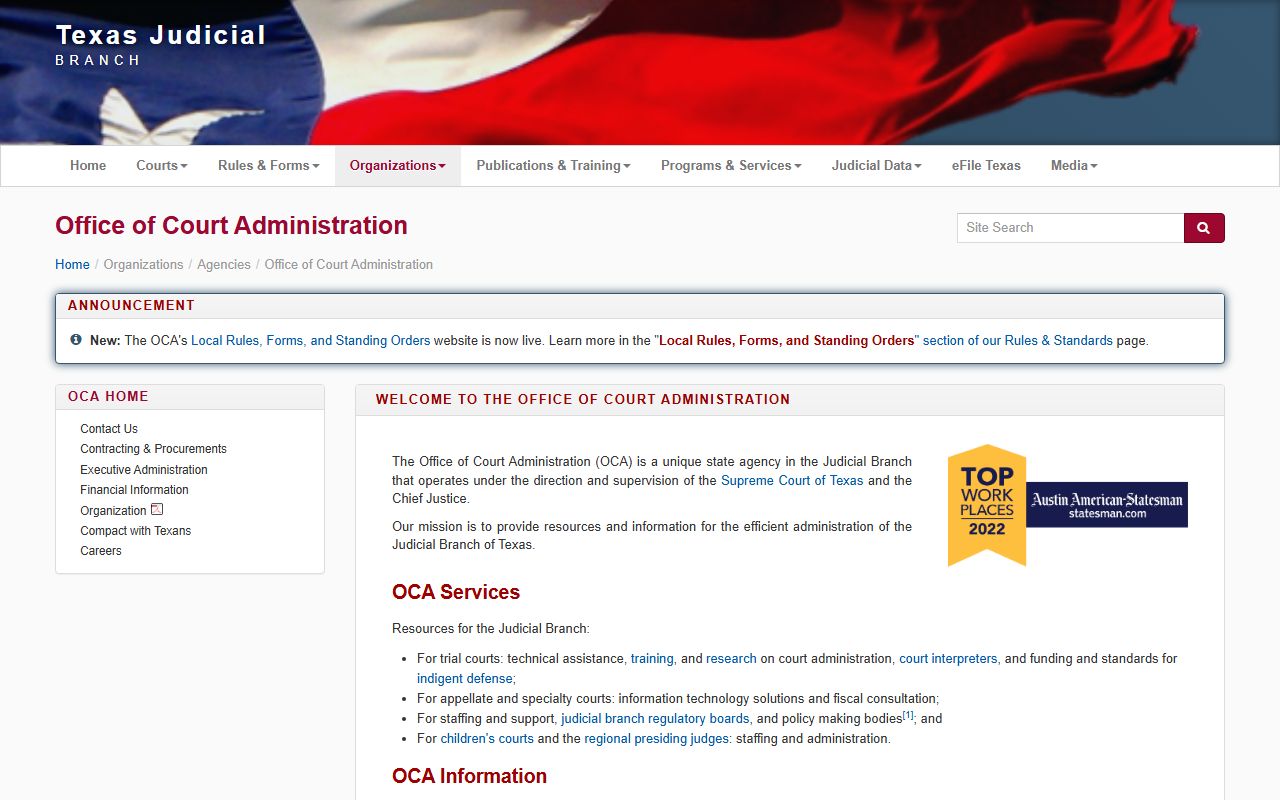
The OCA annual reports show how many cases each court type filed, how many were resolved, and how long cases typically take to move through the docket.
Public Access to Texas Court Docket Records
Court docket records in Texas are generally public under Texas Government Code Chapter 552, the Texas Public Information Act. You do not need to be a party to the case. You do not need to give a reason for requesting records. Most case information is open to anyone who asks at the District Clerk's or County Clerk's office.
The Texas Attorney General's Office enforces the Public Information Act and issues rulings on records requests. The Open Government Division processes roughly 25,000 public information rulings per year. Many of these involve court records and judicial branch information. If a governmental body refuses to release records, a requester can ask the Attorney General's Office to review the decision. The open records hotline is (512) 478-6736.
The Texas Attorney General's Open Government page explains how to request public records and what exceptions apply.

From this page you can read the Texas Public Information Act, find sample request letters, and learn how to appeal a denial of access to court records or other government documents.
Some records have restricted access. Juvenile case records are sealed by law. Records involving ongoing grand jury proceedings are confidential. Certain financial documents may be sealed on motion by a party. Social security numbers and bank account numbers get redacted before public release. Outside of those exceptions, the docket itself and most filed documents are open to the public.
Note: Sealed cases and juvenile records are not publicly accessible under Texas law, even through official online portals or in-person requests at the clerk's office.
Texas DPS Crime Records and Court Dockets
The Texas Department of Public Safety maintains the Computerized Criminal History (CCH) database. This is separate from court dockets but closely related. The CCH contains arrest records, prosecution records, and court dispositions reported by local agencies. When a criminal case goes through the court system, the outcome gets sent to DPS and added to the person's criminal history record.
Court dockets show the active case history. DPS records show the final outcome as reported by the courts and law enforcement. Both systems are useful but serve different purposes. For a pending case, the court docket is your source. For a closed case and its final outcome, DPS records may also be relevant. The DPS Crime Records Service provides access to criminal history checks and also maintains the Texas Public Sex Offender Registry.
Visit the DPS Crime Records page for information on criminal history searches and fingerprint-based background check services.
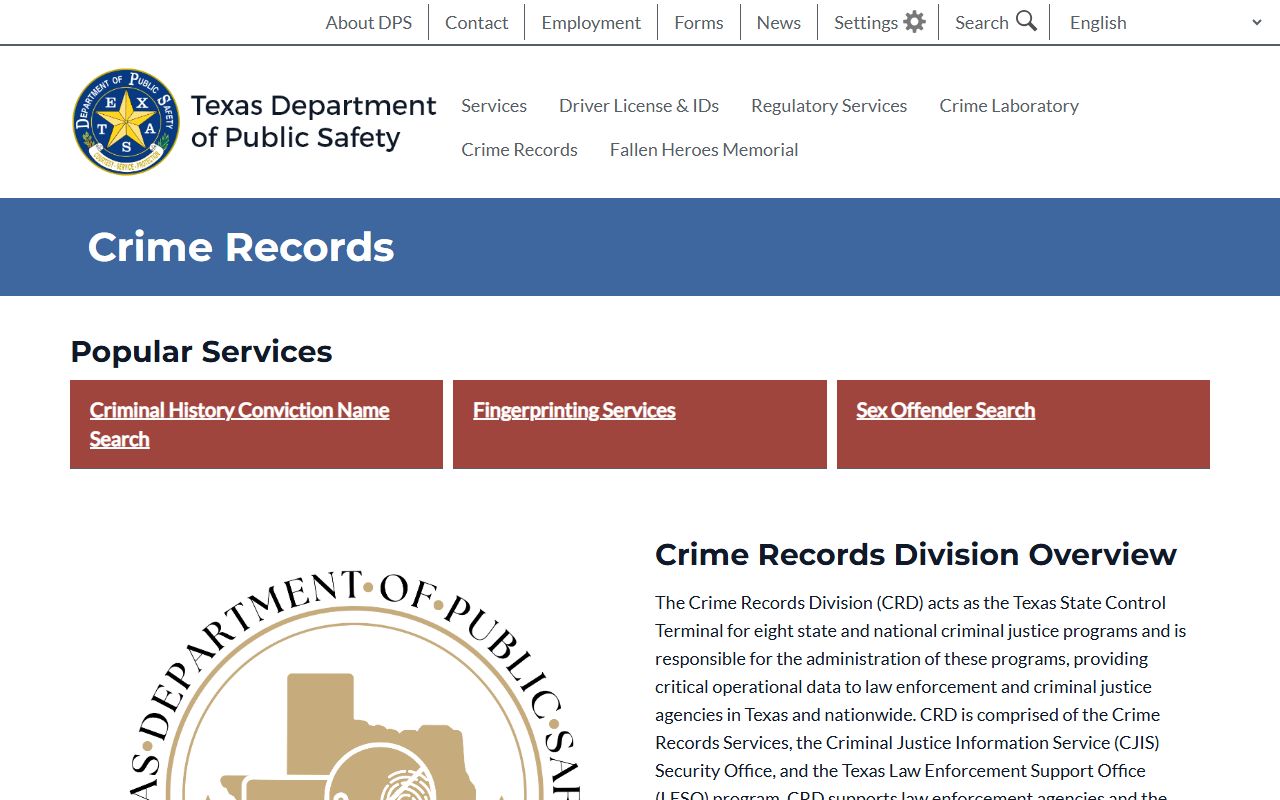
This page covers how DPS collects criminal history data from courts, how records can be corrected for inaccuracies, and what access different types of requesters have to this information.
Legal Research Tools for Texas Court Cases
The Texas State Law Library is located in the Supreme Court Building in Austin and provides free public access for legal research. It holds an extensive collection of Texas statutes, case law, and legal periodicals. Reference librarians can help you find specific court rules, look up procedural requirements, and navigate legal research databases. The library also publishes free research guides on common legal topics including criminal procedure, civil practice, and family law matters that appear on court dockets.
The library's online catalog is accessible to the public and includes links to digitized historical legal materials, including older Texas statutes and court reports going back to the Republic of Texas era. The self-help section of the website at sll.texas.gov has guides for people who want to research their own cases or understand the court process without hiring a lawyer.
The Texas State Law Library offers legal research resources and guides for court records, procedures, and case law.
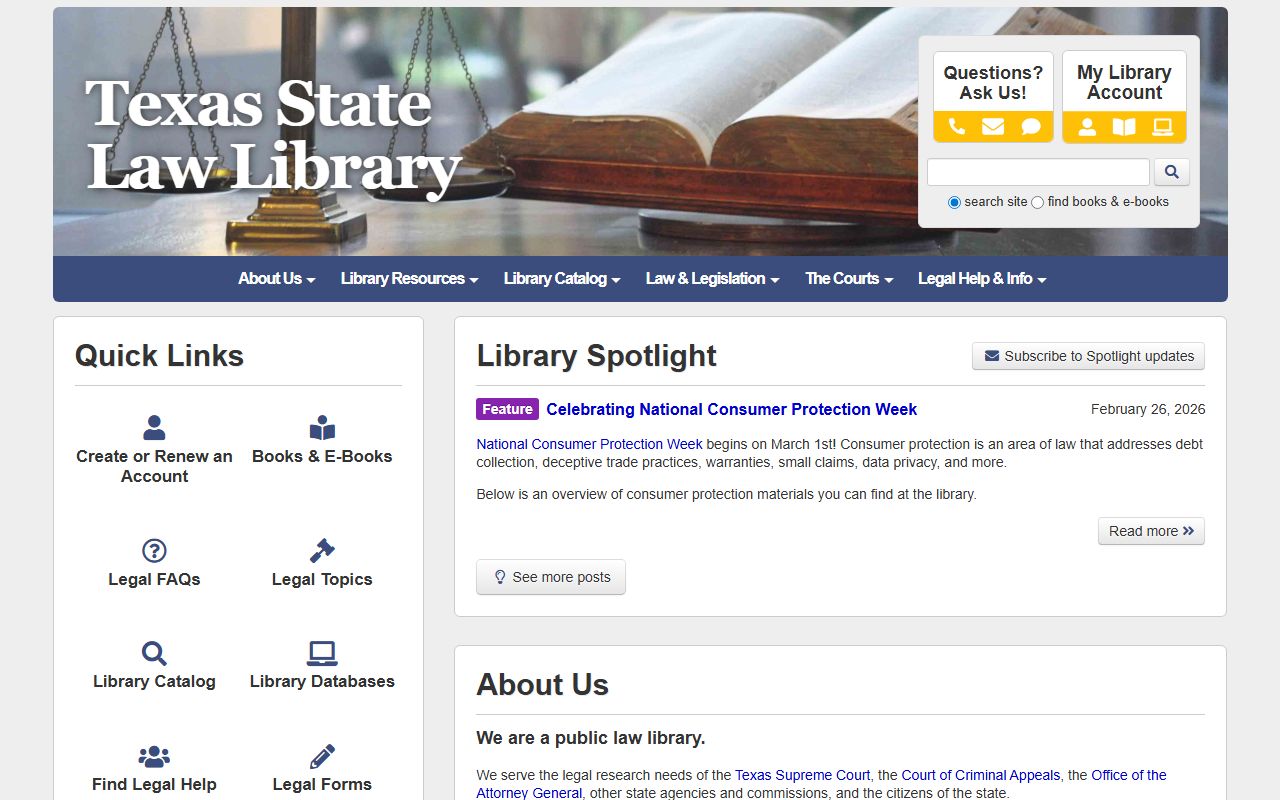
The library provides access to Westlaw, LexisNexis, and HeinOnline on-site, along with free online research guides on topics like how to read a court docket, what case types go to which courts, and how to request certified copies of court documents.
Texas statutes governing court procedures are available at Texas Legislature Online. This site has the full text of all Texas codes, including the Texas Rules of Civil Procedure, the Texas Code of Criminal Procedure, and the Texas Government Code. You can search by statute number or keyword. All Texas laws affecting court dockets, public records access, and filing procedures are here.
The Texas Legislature Online provides the full text of Texas statutes, including court procedure rules and public records laws.
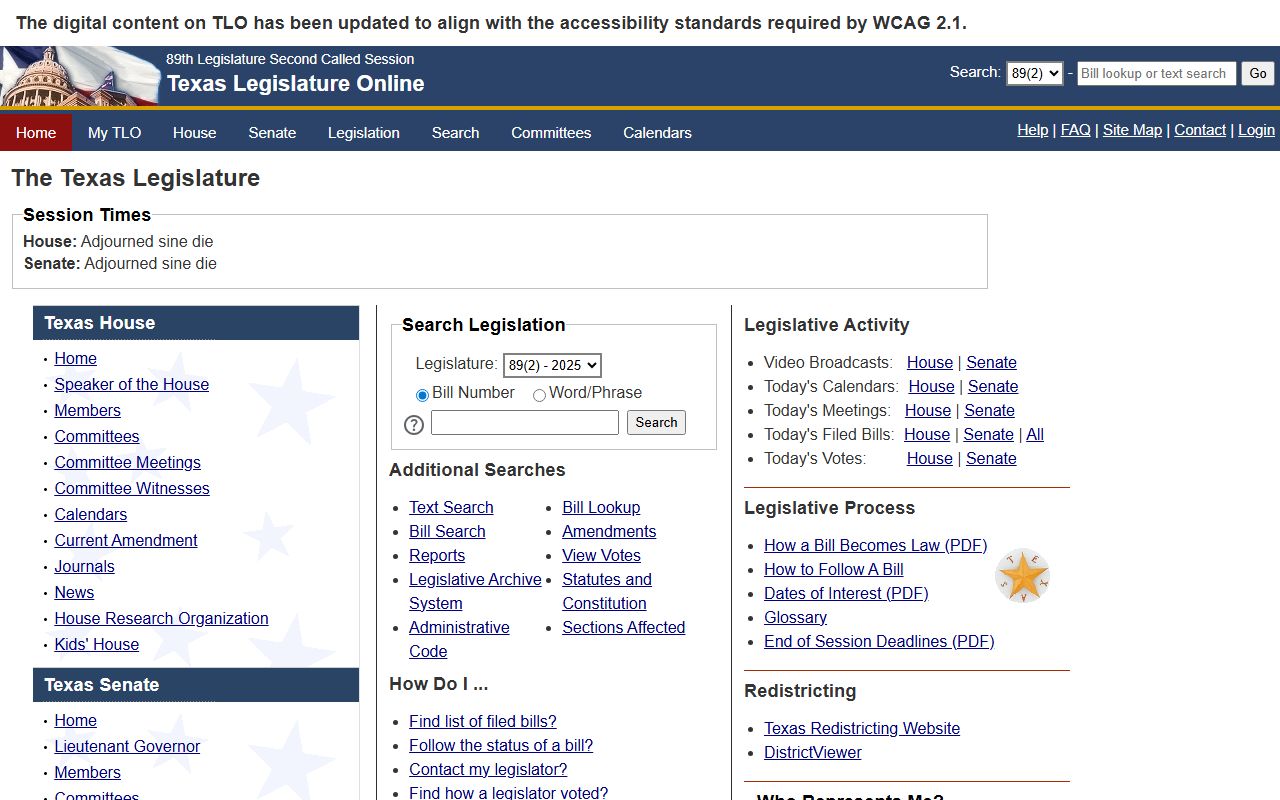
From this site you can track bills that affect court procedures, read the current text of any Texas code section, and look up the legislative history behind court access rules.
Historical and Archived Texas Court Records
The Texas State Library and Archives Commission serves as the permanent repository for historical Texas government records. This includes court records from courts that no longer exist and historical district court records deposited by counties over the years. The Archives Division maintains records from the Texas Supreme Court and Court of Criminal Appeals going back to the 19th century.
The Texas Digital Archive provides online access to digitized historical records, including some old court case files, government documents, and related materials. For genealogy research or historical case work, TSLAC is often the right place to start. The commission also coordinates the Local Government Records program, which sets retention schedules for court records statewide and helps county clerks manage older files. Visit tsl.texas.gov for more information.
The Texas State Library and Archives Commission holds historical court records and provides guidance on how long records must be kept.

Researchers can search finding aids online before visiting in person, and the reference staff can help locate specific historical court records from counties across the state.
Attorney General Opinions on Court Records
The Texas Attorney General issues formal opinions interpreting state law, including how the Texas Public Information Act applies to specific types of court records. These opinions are binding on the governmental body that requested them and serve as precedent for similar situations. The AG's Office processes thousands of these rulings each year. Many deal directly with questions about which court records are public and which can be withheld.
The Attorney General Opinion Search database lets you look up past rulings by keyword, statutory section, or topic. If you are trying to determine whether a specific court record should be public, searching this database for similar cases can help clarify your rights. The AG website also has training materials and guidance for governmental bodies on proper handling of records requests.
Use the AG Opinion Search to research past rulings on court records access and public information requests.
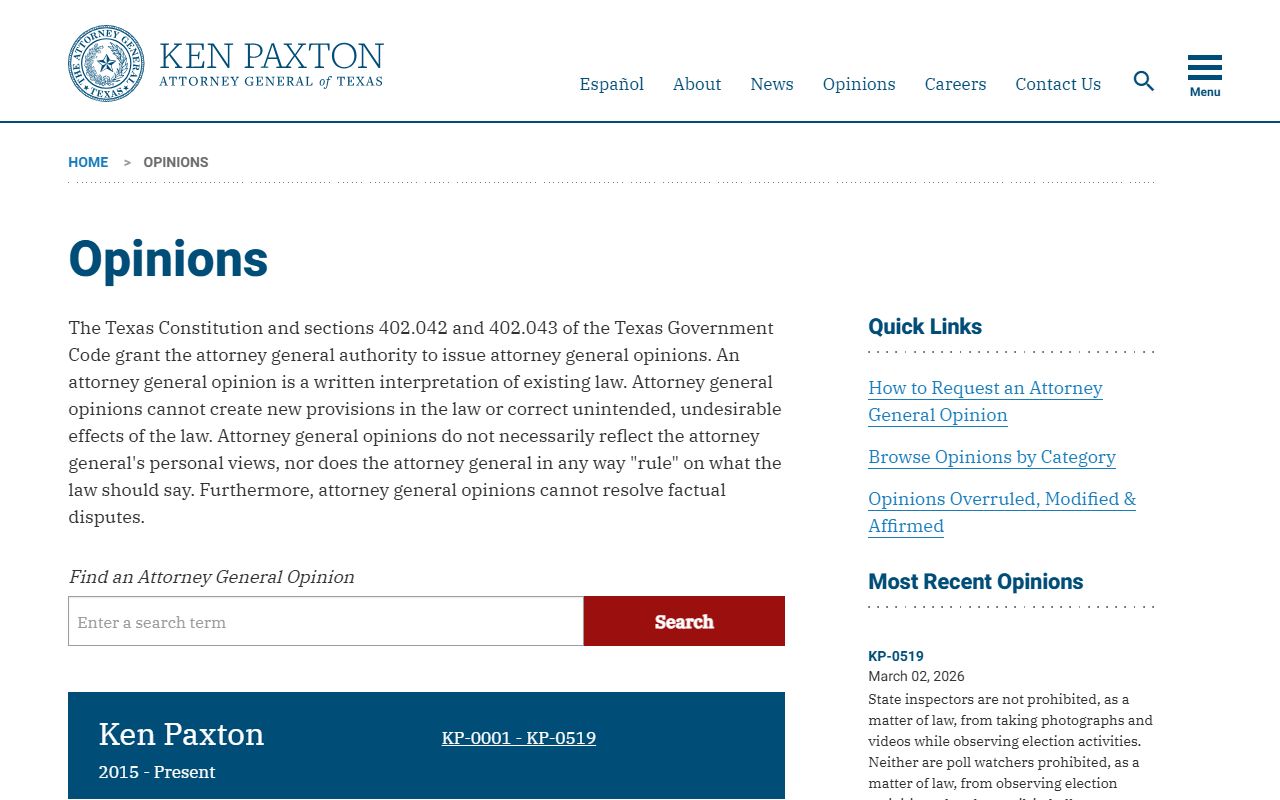
Opinions from the Attorney General carry significant legal weight in Texas and help define what courthouse staff can legally withhold when a member of the public requests docket records or case files.
Browse Texas Court Dockets by County
Each of Texas's 254 counties has its own District Clerk that maintains court docket records for district court cases filed in that county. Select a county below to find local clerk contact information, search portals, and resources for court docket records in that area.
Court Dockets in Major Texas Cities
Major Texas cities handle their own municipal court dockets for Class C misdemeanors and city ordinance violations. For district court and county court cases, residents file in the county where they live. Select a city below to find local court resources and docket search tools.