
Dallas County Court Docket Records
Dallas County court docket records cover one of the largest court systems in Texas, with 43 district courts and 20 county courts at law handling well over 150,000 new filings each year. The District Clerk's office in downtown Dallas is the main source for case searches, and both online and in-person options are open to the public. This guide breaks down how to find docket entries, what fees to expect, and which offices to contact when you need court records from Dallas County.
Dallas County Overview
Dallas County District Clerk Office
The Dallas County District Clerk is the main keeper of court docket records for all 43 district courts. This office sits in the George L. Allen, Sr. Courts Building at 600 Commerce Street in downtown Dallas. Staff here process filings for civil, criminal, family, and juvenile cases. The office also runs the Henry Wade Juvenile Justice Center for juvenile records. With more than 300 staff members spread across multiple divisions, this is one of the biggest clerk operations in the state.
Each case that moves through a Dallas County district court gets a docket entry. That entry tracks every step from the first filing to the final judgment. Motions, hearings, bond settings, plea entries, and orders all show up on the docket sheet. The District Clerk keeps these records on file and makes them available to the public unless a court has sealed them or the law restricts access.
| Office | Dallas County District Clerk |
|---|---|
| Address | 600 Commerce Street, Suite 101, Dallas, TX 75202 |
| Phone | (214) 653-6601 |
| Hours | Monday through Friday, 8:00 AM to 4:30 PM |
| Website | dallascounty.org/courts/district-clerk |
The Dallas County Clerk handles a separate set of cases. That office serves as clerk for 20 county courts at law and 7 probate courts. Misdemeanor criminal cases, civil matters under $250,000, and probate filings go through the County Clerk at 509 Main Street, 2nd Floor. You can reach them at (214) 653-7099. For most felony and high-value civil docket records, the District Clerk is your first stop.
Note: Dallas County's District Clerk website lists fee schedules, forms, and contact details for each court division, so check there before visiting in person.
The Dallas County Clerk's website provides access to county court records and vital records services. The image below shows the Dallas County Clerk's online portal, which covers court case searches, property records, and marriage license services for Dallas County.

This portal lets you look up county-level court docket information including misdemeanor cases and probate filings handled by the County Clerk's office.
Searching Dallas County Court Docket Records Online
Dallas County gives the public two main ways to search court docket records online. The District Clerk runs a case search system at dcweb.dallascounty.org where you can look up cases by name, case number, or date range. Name searches need at least three characters. Case numbers follow a set format: DC-YY-NNNNN for county civil, F-YY-NNNNN for family, and CR-YY-NNNNN for criminal. You can also filter by case type, court, and status. Results show the filing date, parties, case type, and current status in real time as staff process new filings.
The County Clerk offers a second portal at dallascounty.org/county-clerk/online-services.php for county court records. This covers misdemeanor cases, small civil disputes, and probate matters. Both portals are free to use. If you can't find what you need on either site, try the statewide re:SearchTX portal run by the Texas Office of Court Administration. It pulls in Dallas County records along with data from over 150 other Texas counties.
Keep in mind that not all documents are viewable online. Docket sheets and basic case data are usually there, but full motions, exhibits, and sealed filings often need a direct request to the clerk. Try different name spellings if your first search comes up empty. Data entry mistakes happen.
The Texas Judicial Branch website is a good starting point for understanding how Dallas County courts fit into the statewide system. The image below shows the homepage for the Texas Judicial Branch, which links to court directories and rules for all Texas counties.
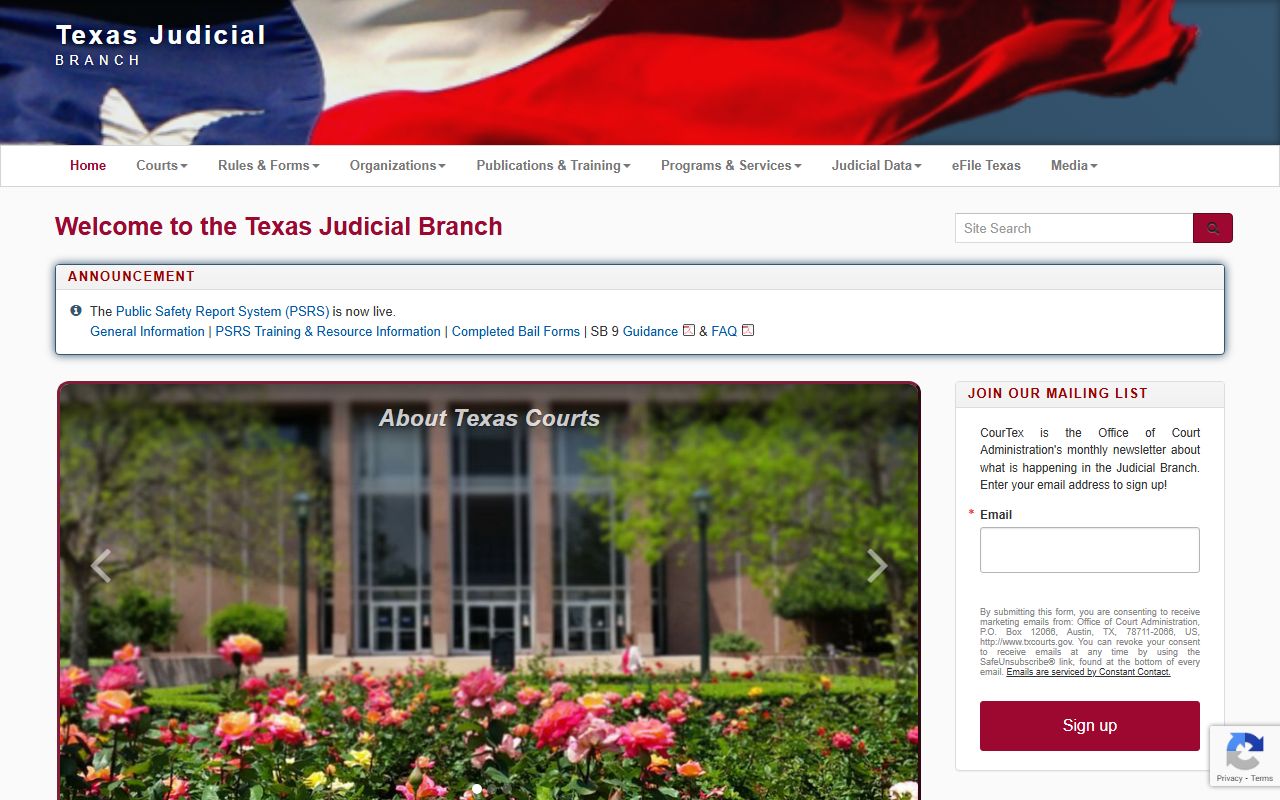
From this page you can reach the Office of Court Administration, local court directories, and the re:SearchTX portal for Dallas County case lookups.
What Dallas County Docket Records Contain
A court docket is the official log of every action in a case. Dallas County court docket records span the full range of district court matters, from felony criminal prosecutions to civil lawsuits worth millions. Each entry on the docket lists the case number, parties, the type of action taken, and the date. The Criminal Division tracks arraignments, plea entries, bond hearings, and sentencing. The Family Division logs divorce petitions, custody motions, temporary orders, and final decrees. The Civil Division covers personal injury claims, contract disputes, and property cases.
Inside a typical docket you will find the original petition or indictment, any answers or responses, all motions and their rulings, hearing dates, trial settings, and the final judgment. Dallas County's historical records go back to 1846 when the county was first organized. Older files live in the county archives and can be pulled by special request. Under the Texas Government Code, permanent case files are the standard for felony criminal and civil matters. Some records, especially juvenile files and sealed proceedings, are not open to the public per the Texas Family Code.
Dallas County Court Docket Fees and Copies
Standard copy fees in Dallas County follow Texas state rates. Plain copies cost $1.00 per page. Certified copies run $5.00 for the certification plus $1.00 for each page. Certified copies carry a court seal and are the type you need when submitting documents to another court or government agency. You can get copies in person at the District Clerk's office, by mail, or through the online portal.
Marriage licenses cost $91.00 without a premarital counseling certificate or $11.00 with one. Birth certificates are $23.00 and death certificates are $21.00 through the County Clerk. Mail requests should include a check or money order. Processing usually takes 5 to 10 business days for mail orders.
The eFileTexas portal is how attorneys in Dallas County submit new filings and receive court documents electronically. The image below shows the eFileTexas login page, which is the mandatory e-filing system for Texas attorneys filing in district and county courts.
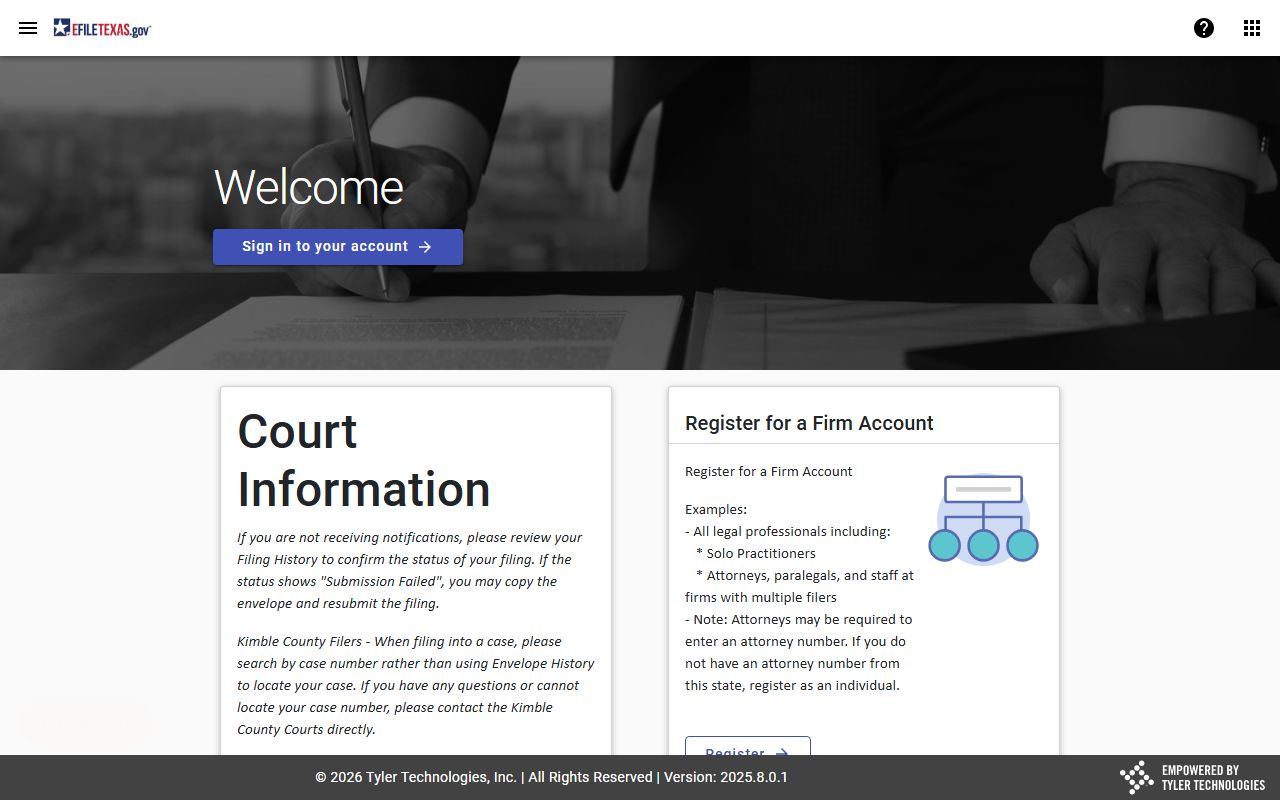
While the public cannot file through eFileTexas directly, this system is why many new Dallas County docket entries appear quickly after attorneys submit them.
Note: If you are unsure about the total cost of your records request, call the District Clerk at (214) 653-6601 before sending payment by mail.
Court Docket Access Under Texas Law
Court docket records in Dallas County are public records. The Texas Public Information Act, found in Government Code Chapter 552, says government records are open unless a specific exception applies. Court records have their own rules under the Texas Rules of Civil Procedure and the Government Code, but the general right of public access holds strong. You can direct a formal open records request to the District Clerk in writing. The office has ten business days to respond.
The Texas Attorney General's Open Government page publishes guidance for both requesters and government offices. If you hit a wall trying to get Dallas County records that should be public, the AG's office can step in. Sealed cases, juvenile records, and certain family law documents may still be withheld even under the Act.
The Texas Attorney General's Open Records page explains the rights of the public when requesting government documents, including court filings and docket sheets from offices like the Dallas County District Clerk.

Knowing your rights under the Public Information Act can make a real difference when requesting Dallas County docket records that should be publicly available.
Dallas County Court Structure
Dallas County runs one of the largest court systems in Texas. There are 43 district courts split across civil, criminal, family, and juvenile divisions. The county also has 20 county courts at law handling misdemeanors and smaller civil cases, plus 7 probate courts. Justice of the peace courts and municipal courts round out the lower levels. Texas courts operate under a split system. The Texas Supreme Court oversees civil matters, while the Texas Court of Criminal Appeals handles criminal cases at the top level.
The Office of Court Administration publishes annual reports on case loads across all Texas counties. Dallas County consistently ranks among the highest for total filings. Attorneys must use eFileTexas to submit cases. Self-represented litigants can still file in person at the courthouse, though e-filing is available to them too. The District Clerk's office can tell you which forms to use and where to file them.
Legal Resources for Dallas County
Several free resources can help you navigate Dallas County's court system. TexasLawHelp offers plain-language guides on family law, debt, housing, and other civil issues. The Texas State Law Library gives free access to statutes, court rules, and legal research tools. The State Bar of Texas runs a lawyer referral service that connects you with attorneys who practice in the Dallas area. Dallas County also has local legal aid organizations like Dallas Volunteer Attorney Program and Legal Aid of NorthWest Texas that serve income-qualifying residents.
The Texas State Law Library, shown below, is a free resource for anyone who needs access to Texas statutes, court rules, and research databases relevant to Dallas County court cases.
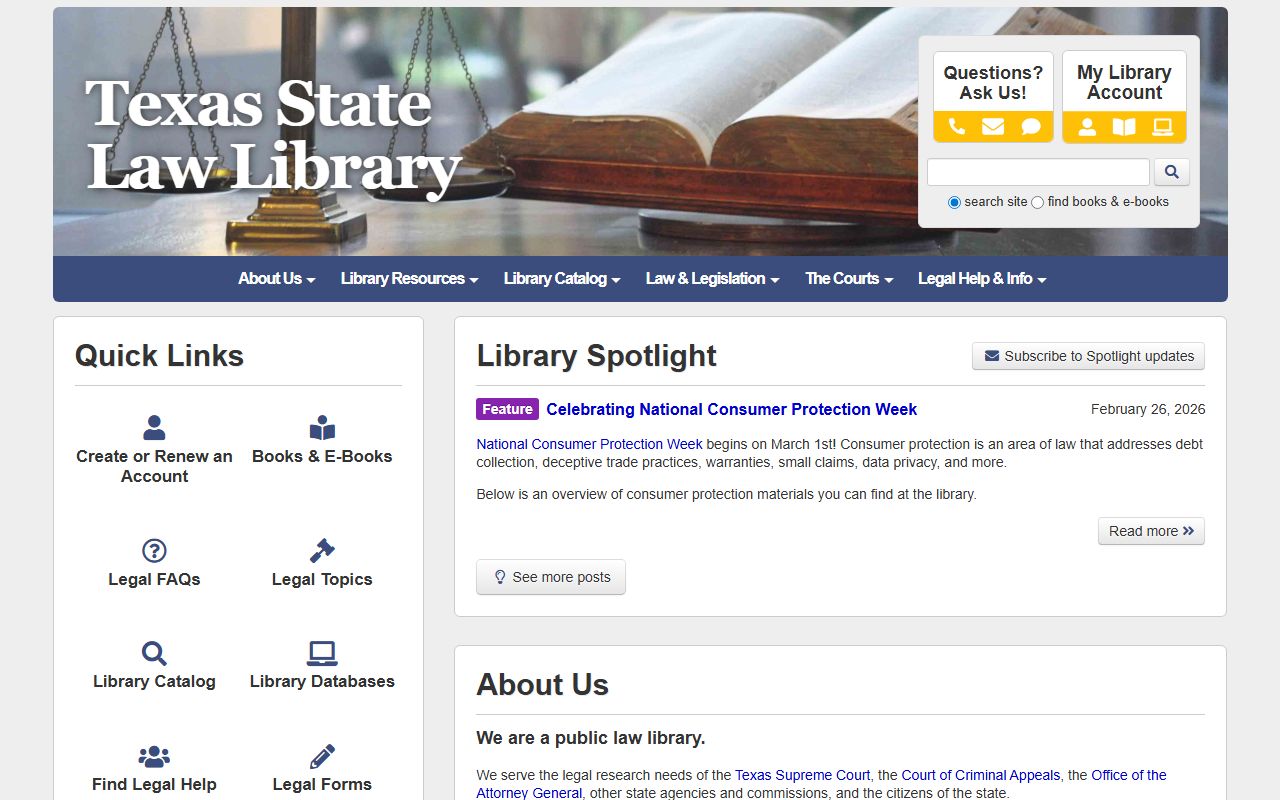
The library's online tools are available to all Texas residents, and staff can help you find the right statutes and procedural rules for your Dallas County case.
Nearby Texas Counties
Dallas County borders several North Texas counties, each with its own District Clerk and court docket system. Cases involving parties from multiple counties can show up in more than one jurisdiction.