
Find Court Docket in Milam County
Milam County court docket records are kept by the District Clerk's office in Cameron, a Central Texas community that serves as the county seat. The clerk processes all district court filings for civil, criminal, and family law cases. Milam County is a rural county between Austin and Bryan-College Station, and the courthouse in Cameron handles all court business for the area. This page walks through the available search tools, office contacts, and procedures for getting Milam County docket records, whether you prefer to look online, visit in person, or request copies by mail.
Milam County Overview
Milam County District Clerk
The District Clerk in Milam County manages all district court docket records. This office processes filings for civil lawsuits, felony criminal cases, family law matters including divorce and child custody, and juvenile proceedings. Every case generates a docket that tracks each action from the initial filing through final judgment. That means motions, hearing dates, rulings, orders, and dispositions all get logged in the record.
Cameron is the county seat and the location for all in-person record requests. The Milam County Courthouse sits on the town square and has served the county for many years. Staff at the District Clerk's office handle walk-in requests during standard business hours. They can search for cases, pull files from storage, and make copies. If your request involves several files or older records, a call ahead helps them get ready.
| Office | Milam County District Clerk |
|---|---|
| Address | 107 W. Main Street, Cameron, TX 76520 |
| Phone | (254) 697-7030 |
| Hours | Monday through Friday, 8:00 AM to 5:00 PM |
The County Clerk handles county court records for misdemeanors, probate, and smaller civil disputes. Both offices are in the same courthouse building. For felony charges and civil cases above $200, go to the District Clerk first.
The Texas Judicial Branch website is a helpful resource for understanding how Milam County courts fit into the broader state system. The screenshot below shows the main page of this portal.
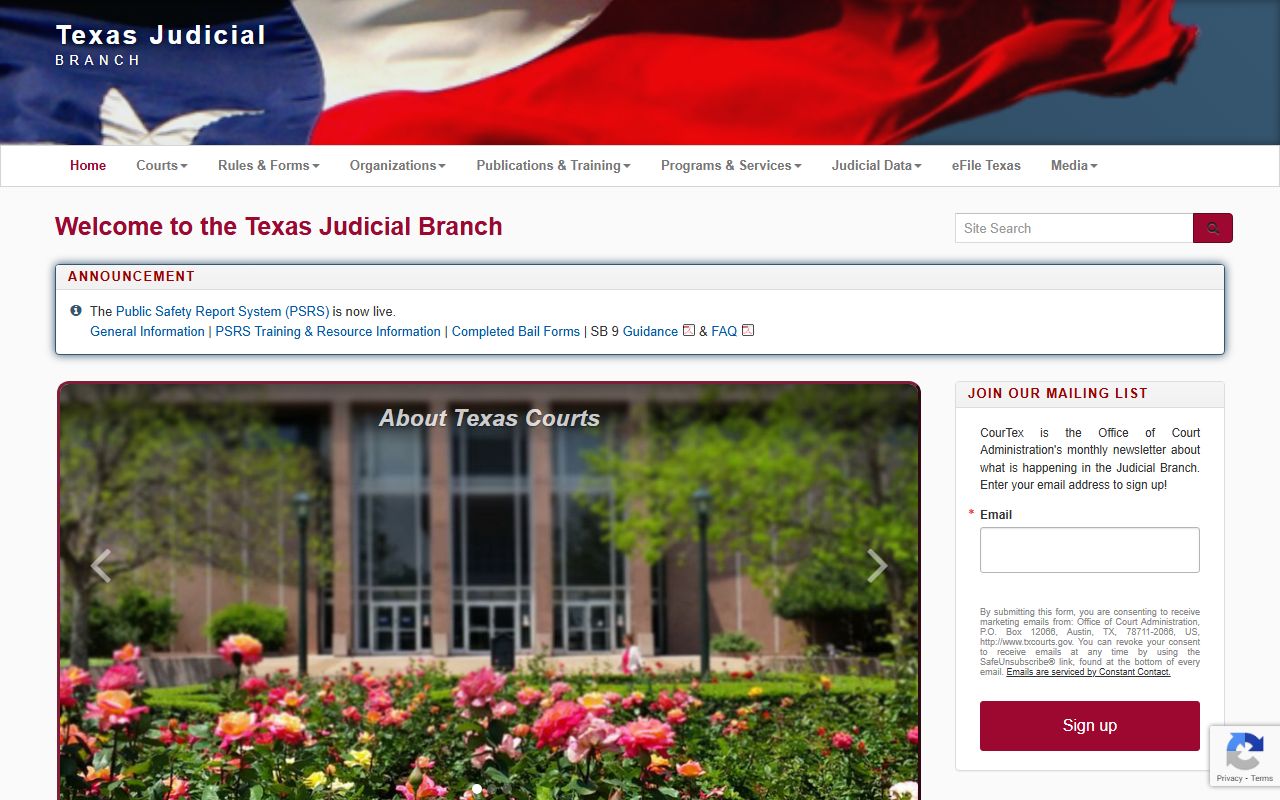
From here you can find court directories, judicial rules, and the re:SearchTX tool for Milam County case lookups.
Searching Milam County Court Docket Online
The primary free online tool for searching Milam County court docket records is re:SearchTX. Run by the Office of Court Administration, this statewide portal covers more than 150 Texas counties. You can search by party name or case number and get basic case information. Results show the filing date, case type, parties involved, and current status.
Milam County does not maintain its own online case search system. So re:SearchTX is the primary way to check records from a distance. Not all documents show up online. Full docket sheets, motions, and exhibits usually need a request to the clerk's office. Try spelling variations if a name search comes up short. Case number searches are always more reliable when you have the number.
For historical records or cases not in re:SearchTX, call the District Clerk at (254) 697-7030. Staff can search internal systems that are not available to the public online. Mail requests are also accepted.
Note: re:SearchTX is free and does not require registration for basic lookups, though some document downloads may carry a small fee.
Contents of Milam County Docket Records
A court docket is the official record of every action in a case. Milam County court docket records span all district court case types. Each entry shows the case number, the parties, what happened, and the date. The docket builds a complete timeline over the life of the case.
Inside a docket you will find the original petition or indictment, responses from the opposing side, motions and rulings, hearing and trial schedules, court orders, and the final judgment or disposition. Criminal dockets also include arraignment records, plea entries, bond information, and sentencing details. Family law dockets may contain temporary orders, property inventories, and final divorce decrees. Under the Texas Government Code, felony and civil records are generally kept permanently.
Some records are restricted from the public. Juvenile cases, sealed proceedings, and certain family law documents cannot be accessed without special authorization. Check with the clerk if you are not sure whether a specific record is available.
Getting Milam County Court Docket Records
Three methods are available for obtaining Milam County court docket records. In-person visits to the courthouse in Cameron offer the most complete access. Bring a photo ID and let the staff know what you need. They can search for cases, pull files, and copy documents. This works best for older records or when you need to review a physical case file.
Mail requests are an option for those who cannot visit Cameron. Send a letter to the District Clerk that identifies the case by name and number if possible, plus a check or money order for copy fees. Copies are $1.00 per page for plain and $5.00 plus $1.00 per page for certified. Certified copies have the court seal and are sometimes needed in other courts or agencies. Allow extra time for mail processing.
All attorney filings in Milam County go through the eFileTexas system. The image below shows the login page for this statewide mandatory electronic filing portal.
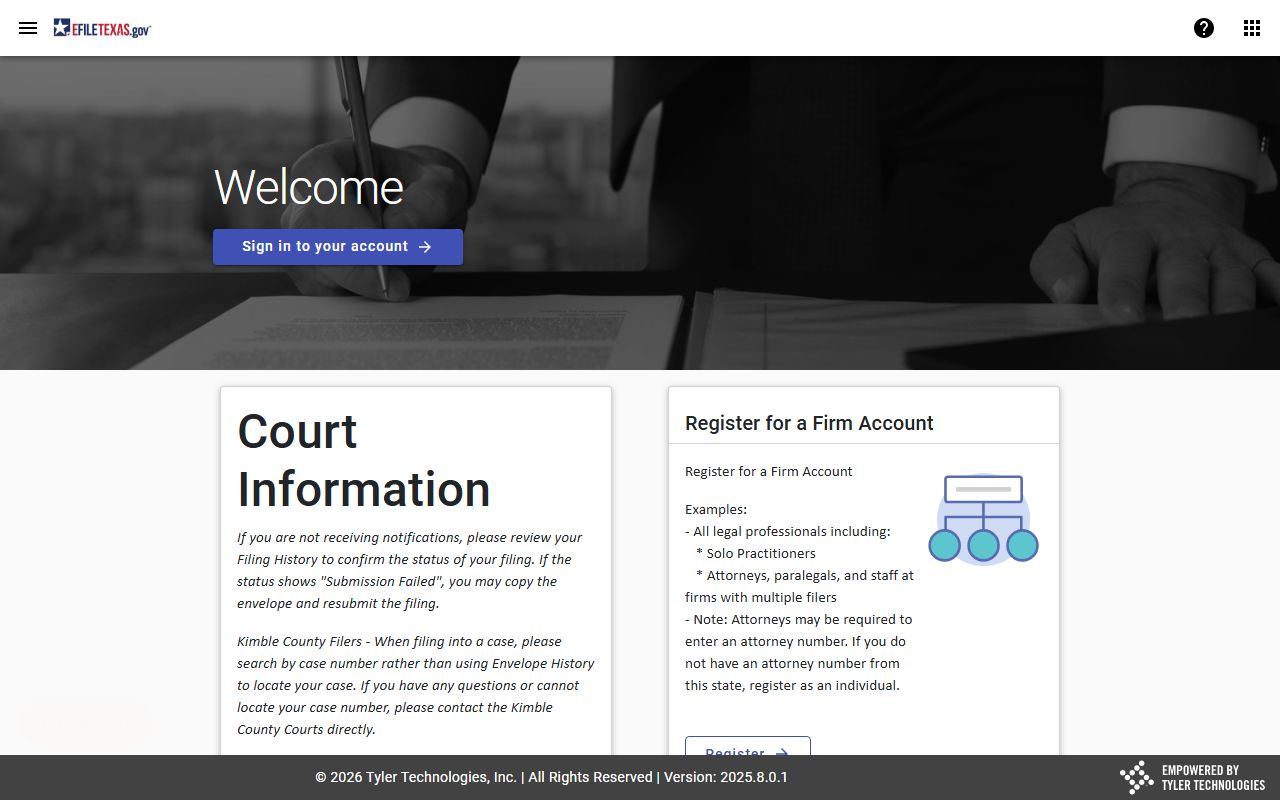
Public users do not file through eFileTexas, but it explains why new docket entries appear quickly after attorneys submit their documents.
Public Records and Milam County Dockets
Court docket records in Milam County are public records under Texas law. The Texas Public Information Act, Government Code Chapter 552, creates a presumption that government records are open unless a specific statutory exception applies. Most records at the District Clerk's office are subject to this rule. Written requests must be answered within ten business days.
The Texas Attorney General's office manages compliance oversight for public information laws statewide. Their website includes sample request forms, guidance documents, and a telephone hotline for questions. If a records request gets denied and you believe the records should be public, the AG can review the matter and issue a binding ruling.
The Texas Attorney General's Open Records page, shown below, details public access rights for government documents, including court filings from the Milam County District Clerk.

Knowing your rights under the Act helps when requesting records from any Texas county office.
Note: Juvenile records, sealed cases, and some family law documents are exempt from public disclosure even under the Public Information Act.
Milam County Court Structure
Milam County has one district court with jurisdiction over felony criminal cases, civil matters above $200, family law, and juvenile proceedings. The county court handles misdemeanors, probate, and smaller civil claims. The state court system is overseen by the Texas Supreme Court for civil matters and the Court of Criminal Appeals for criminal cases.
The Office of Court Administration publishes annual caseload data for all Texas counties including Milam. These reports show filing numbers, dispositions, and pending cases. Attorneys must use eFileTexas for all district court filings. Self-represented litigants can file in person at the Cameron courthouse.
Legal Resources Near Milam County
Free legal resources exist for Milam County residents who need help with court docket matters. The Texas State Law Library provides free online access to statutes, court rules, and research tools. This is a strong starting point for self-represented litigants.
The State Bar of Texas offers a lawyer referral service that covers Central Texas. Lone Star Legal Aid serves parts of the region and may provide free civil legal help to qualifying residents. The DPS Crime Records Service maintains the statewide criminal history database, and the Texas State Library and Archives Commission holds historical court records from across Texas.
Nearby Texas Counties
Milam County is in Central Texas and borders several counties, each maintaining its own court docket records. Cases that involve parties from more than one county may show up in multiple court systems.