
Guadalupe County Court Docket
Guadalupe County court docket records are maintained by the District Clerk in Seguin, Texas. This growing Central Texas county east of San Antonio handles a substantial volume of civil, criminal, and family law cases each year through multiple courts. If you need to look up a case, check on a hearing, or get copies of court documents, this page explains the search tools, contact details, and access methods for Guadalupe County court docket records. Links to online search portals and state legal resources are included throughout.
Guadalupe County Overview
Guadalupe County District Clerk Office
The District Clerk in Guadalupe County is the primary custodian of district court docket records. Guadalupe County has two district courts that handle felony criminal cases, civil disputes, family law matters, and juvenile proceedings. The clerk's office processes a high volume of filings each year due to the county's rapid growth as part of the greater San Antonio metro area. Every action in a case gets logged in the docket, and the clerk's staff can help you find files, request copies, and understand the fee schedule.
Seguin is the county seat. The courthouse is downtown, and the District Clerk's office is open weekdays. Because of the volume of cases, wait times can vary during peak hours. If you have a complex request, calling ahead to schedule a time is a good idea.
| Office | Guadalupe County District Clerk |
|---|---|
| Address | 101 E. Court Street, Suite 300, Seguin, TX 78155 |
| Phone | (830) 303-4188 |
| Hours | Monday through Friday, 8:00 AM to 5:00 PM |
The Guadalupe County Clerk handles records for the county courts at law, which cover misdemeanor criminal cases, probate, and civil matters within the county court's jurisdiction. That office is in the same building. For felony cases, most civil suits, and family law matters, the District Clerk is your starting point.
The Texas Judicial Branch website shows how Guadalupe County courts fit into the statewide system. Below is the homepage with court directories and resources for all Texas counties.

From here you can reach the Office of Court Administration, find court contact details, and use the re:SearchTX portal for Guadalupe County case searches.
How to Search Guadalupe County Court Docket
The main free tool for searching Guadalupe County court docket records online is re:SearchTX. This statewide portal is run by the Texas Office of Court Administration and covers more than 150 counties. You can search by party name or case number without registering. Results show the filing date, case type, parties, and current case status.
Guadalupe County also participates in the state's electronic filing system, which means many recent records are available through the portal relatively quickly after filing. Older cases may not be in the state system. For those, contact the District Clerk in Seguin directly. Staff can run internal searches that cover records not yet uploaded to re:SearchTX.
When searching by name, try different spellings or abbreviations if your first attempt does not return results. Case number searches are the most precise. Mail requests to the clerk's office are also accepted and should include the case name and number along with a check for estimated fees.
Note: Guadalupe County's case volume is among the higher totals in the region due to steady population growth near San Antonio.
What Guadalupe County Docket Records Contain
A court docket is the official log of every action in a case. In Guadalupe County, docket records cover felony criminal matters, civil lawsuits, family law cases such as divorce and child custody, and juvenile proceedings. Each entry includes the case number, the parties, what action was taken, and the date.
A typical docket file includes the original petition or indictment, responses filed by opposing parties, all motions and rulings, hearing dates, orders from the judge, and the final judgment or disposition. Criminal dockets show arraignments, plea entries, bond settings, and sentencing. Family law dockets may include temporary restraining orders, property inventories, child support calculations, and final decree documents. The Texas Government Code mandates permanent retention for felony and civil case files.
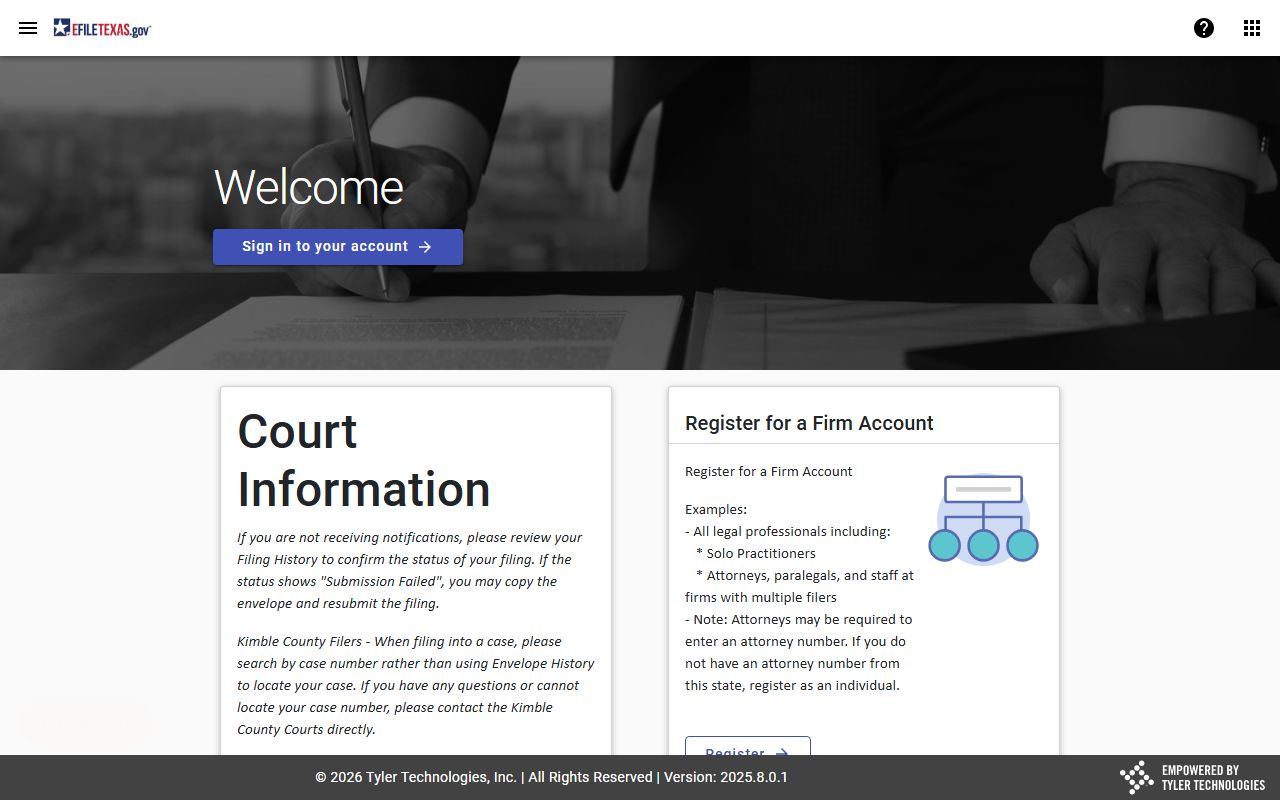
Attorneys filing in Guadalupe County use the eFileTexas system for all district court submissions. The image below shows the eFileTexas login page.
Self-represented litigants may still file in person at the Seguin courthouse. The clerk's office can help with forms and filing procedures.
Copies and Fees for Guadalupe County Records
You can get copies of Guadalupe County court docket records in person, by mail, or partially online. An in-person visit to the District Clerk at 101 E. Court Street in Seguin is the fastest option. Bring a photo ID and a list of the cases you need. Staff can pull files and make copies for most standard requests while you wait.
Mail requests should include a letter with the case name and number, along with a check or money order for the estimated fees. The office will reach out if the actual cost is different. Processing by mail usually takes about a week depending on volume.
Standard Texas copy fees apply in Guadalupe County. Plain copies cost $1.00 per page. Certified copies are $5.00 plus $1.00 per page. Certified copies carry the court seal and are required for official use in other legal proceedings.
Texas Open Records Law and Guadalupe County
Court docket records in Guadalupe County are public under Texas law. The Texas Public Information Act, codified in Government Code Chapter 552, establishes that government records are open to the public unless a specific exception applies. Written requests to the District Clerk must be answered within ten business days.
The Texas Attorney General's Open Government page provides guidance on making public records requests, including sample letters and an explanation of your rights under the law.
The Texas Attorney General's Open Records page, shown below, outlines how the public can request court documents from offices like the Guadalupe County District Clerk.

Sealed cases, juvenile records, and certain protected family law documents are exceptions to public access in Texas courts.
Guadalupe County Court Structure
Guadalupe County has two district courts that handle felony criminal cases, civil cases above $200, family law, and juvenile matters. The county also has county courts at law for misdemeanor criminal cases, probate, and certain civil disputes. Justice of the peace courts handle Class C misdemeanors, evictions, and small civil claims under $20,000.
Because of the county's growth, the court system has expanded in recent years to keep up with increased filings. The Office of Court Administration tracks filing and disposition data for every county, and Guadalupe's numbers reflect the rapid development in the San Antonio corridor. Attorneys must use eFileTexas for district court submissions.
Legal Resources in Guadalupe County
Several free resources are available for people dealing with Guadalupe County court matters. TexasLawHelp publishes plain-language guides covering family law, debt, housing, and more. The Texas State Law Library offers free online access to statutes, court rules, and research databases.
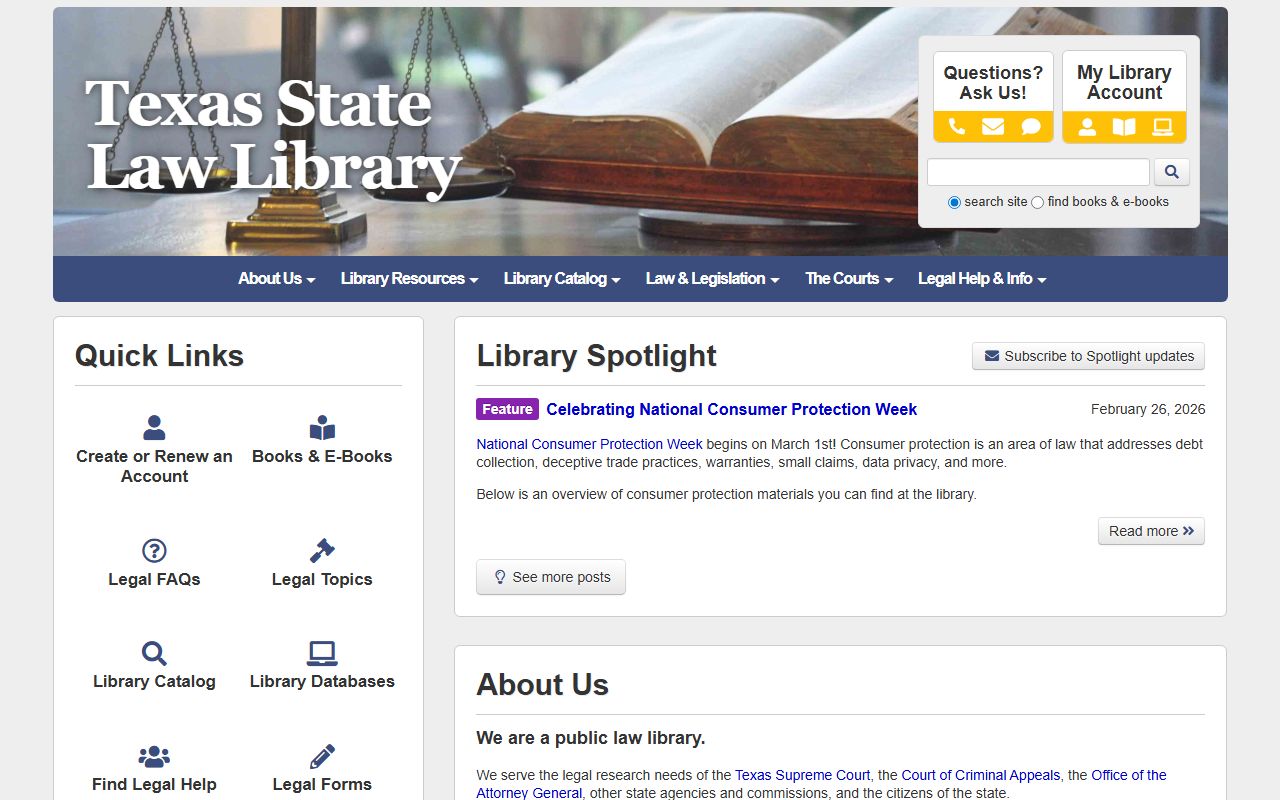
The Texas State Law Library homepage, shown below, provides free legal research tools relevant to Guadalupe County cases.
Staff at the library can help you find the right statutes and forms. Many resources are available online to all Texas residents.
The State Bar of Texas runs a lawyer referral service. Texas RioGrande Legal Aid and other legal aid organizations serve the Guadalupe County area with free civil legal assistance for qualifying residents. If you need a lawyer but cannot afford one, start with these organizations.
Note: The Guadalupe County Law Library at the courthouse also offers reference materials for people representing themselves in court.
Nearby Texas Counties
Guadalupe County is east of San Antonio and borders several Central Texas counties. Each neighbor has its own court docket system, so cases involving parties in multiple counties can appear in more than one court.