
Allen Court Docket Records
Allen court docket records are held by the Collin County District Clerk in McKinney and the Allen Municipal Court on Allen Heights Drive. If you need to search for a case filed in Allen or check a court date, both offices keep docket records you can look up. The District Clerk handles felony, civil, and family cases while the municipal court covers Class C misdemeanors and city code violations. You can start an online search through re:SearchTX or the Collin County court records portal, both of which pull up case info by name or case number. For full documents, you may need to contact the clerk in person or by phone.
Allen Overview
Allen Court Docket at Collin County
Allen sits in Collin County, and all district court cases for Allen go through the Collin County District Clerk's office in McKinney. This office keeps records for 20 district courts that handle civil, criminal, family, and juvenile matters. The District Clerk processes about 50,000 new cases each year. That means a lot of docket entries flow through this system on a daily basis, and cases tied to Allen residents are part of that count.
The courthouse is at 2100 Bloomdale Road in McKinney. You can call the District Clerk at (972) 548-4180 during normal business hours. Staff can help you find a case, pull copies of docket sheets, or tell you what fees apply. Bring photo ID if you plan to visit.
| Office | Collin County District Clerk |
|---|---|
| Address | 2100 Bloomdale Rd, Suite 10250, McKinney, TX 75071 |
| Phone | (972) 548-4180 |
| Hours | Monday through Friday, 8:00 AM to 5:00 PM |
| Website | collincountytx.gov/districtclerk |
The Collin County Clerk at 2300 Bloomdale Road also handles county court at law cases and probate. Misdemeanor cases, property disputes, and smaller civil claims may go through that office instead. You can reach them at (972) 548-4185.
Searching Allen Docket Records Online
The fastest way to look up an Allen court docket is through re:SearchTX, a free statewide search tool run by the Texas Office of Court Administration. It covers more than 150 counties and lets you search by party name or case number. Results show case type, filing date, parties, and status.
Collin County also has its own case search portal on the county website. You can search by name, case number, or date range. This portal often has more detail than re:SearchTX for Collin County cases. Try both if one does not show what you need.
Keep in mind that not all documents are online. Docket sheets may show a list of filings, but the actual motions, orders, and exhibits usually need to be pulled from the clerk. You can request copies by mail or in person. Allen cases filed in district court are searchable through these tools, but municipal court citations are handled separately.
The Texas Judicial Branch website is a good starting point for understanding how courts work across the state, including the ones that serve Allen residents in Collin County.

From this page you can find court directories, rules, and links to the Office of Court Administration and re:SearchTX.
Allen Municipal Court
The Allen Municipal Court handles Class C misdemeanors. These include traffic tickets, city code violations, and other low-level offenses. The court has its own docket and scheduling system that is separate from the county courts. If you got a citation in Allen city limits, this is where your case goes first.
Municipal court cases in Allen can be searched through the court's office. You can pay fines, set up payment plans, or request a hearing. Defensive driving courses may be an option for some traffic violations. Deferred disposition is also available for eligible cases, which can keep the offense off your record if you meet the conditions set by the judge.
If you want to appeal a municipal court ruling, the case goes to the Collin County courts. The county court at law handles those appeals, and the Collin County Clerk's office would then hold the docket for the appeal case.
Note: Municipal court records in Allen cover city-level offenses only and are separate from district court docket records held by the Collin County District Clerk.
What Allen Court Docket Records Show
A court docket is the official log of everything that happens in a case. Each entry has a date, a description of the action, and often the name of the judge or clerk who handled it. In Allen, these records cover a wide range of case types depending on which court has jurisdiction.
District court dockets in Collin County include felony criminal cases, civil cases over $200, family law matters like divorce and custody, and juvenile proceedings. You will find entries for filings, motions, hearings, orders, and final judgments. Family law dockets tend to have extra items like temporary restraining orders, mediation reports, and property inventories. Criminal dockets show arraignment dates, plea entries, bond details, and sentencing outcomes.
The eFileTexas system is how attorneys submit filings to the Collin County district courts that handle Allen cases. The image below shows the eFileTexas login page.
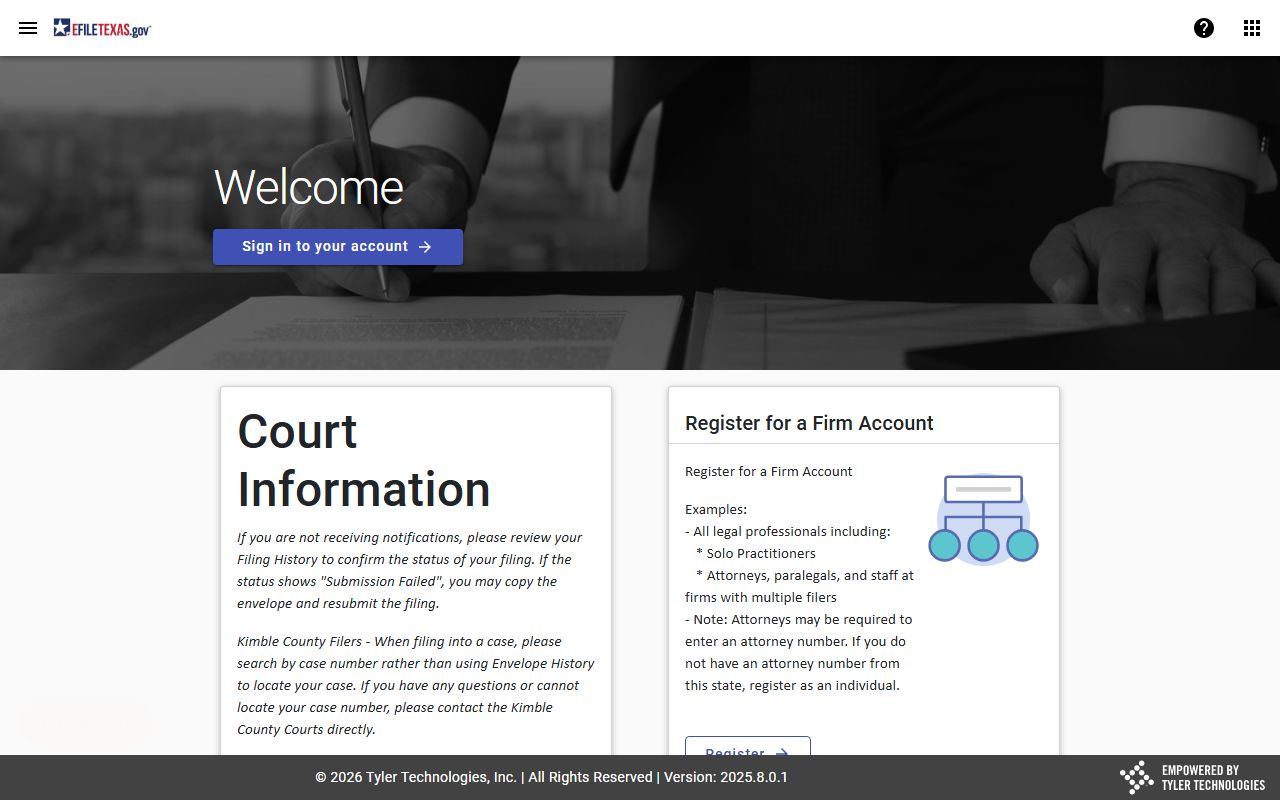
While the public does not use eFileTexas to search records, knowing that filings go through this system explains why new docket entries appear quickly after an attorney submits a document.
Fees and Copies in Allen
Standard copy fees in Collin County are $1.00 per page for plain copies. Certified copies cost $5.00 plus $1.00 for each page. You might need a certified copy if you have to present a court order in another case or another state. The court seal on a certified copy proves it is an official document.
Marriage licenses in Collin County cost $81.00, or $11.00 if you complete a premarital education course. Birth certificates are $23.00 and death certificates are $21.00 through the County Clerk. These are separate from court docket fees but sometimes come up when people are looking for records at the same office.
Public Records Law and Allen Court Dockets
Court docket records in Allen are public under Texas law. The Texas Public Information Act in Government Code Chapter 552 says that government records are open unless a specific exception applies. You can make a written request to the Collin County District Clerk for any public court record, and they have ten business days to respond.
The Texas Attorney General's office provides guidance on open records requests at texasattorneygeneral.gov/open-government. If you run into trouble getting records from the clerk, the AG's office can help resolve disputes about what is and is not public.
The Attorney General's open records page explains the rights of the public when requesting government documents like court docket filings from offices in Allen and Collin County.

Sealed cases, juvenile records, and certain family law documents may be withheld even under the Public Information Act.
Legal Help for Allen Residents
If you need help with a court case in Allen, free resources exist. TexasLawHelp.org has guides on family law, debt, housing, and other civil matters written in plain language. The Texas State Law Library gives you free access to statutes, court rules, and legal research tools.
The State Bar of Texas runs a lawyer referral service at texasbar.com. You can find attorneys who practice in Collin County and handle the type of case you are dealing with. Legal aid organizations in the Dallas-Fort Worth area also serve Allen residents who qualify based on income.
For finding the right forms, the Office of Court Administration publishes court forms and procedural guides. Self-represented litigants can file in person at the courthouse. The District Clerk's office can point you to the right forms for your case type.
Nearby Texas Cities
Allen is in the northern Dallas-Fort Worth metro area, surrounded by other fast-growing cities in Collin County and beyond. Court docket records for residents of nearby cities go through their own county clerk offices.